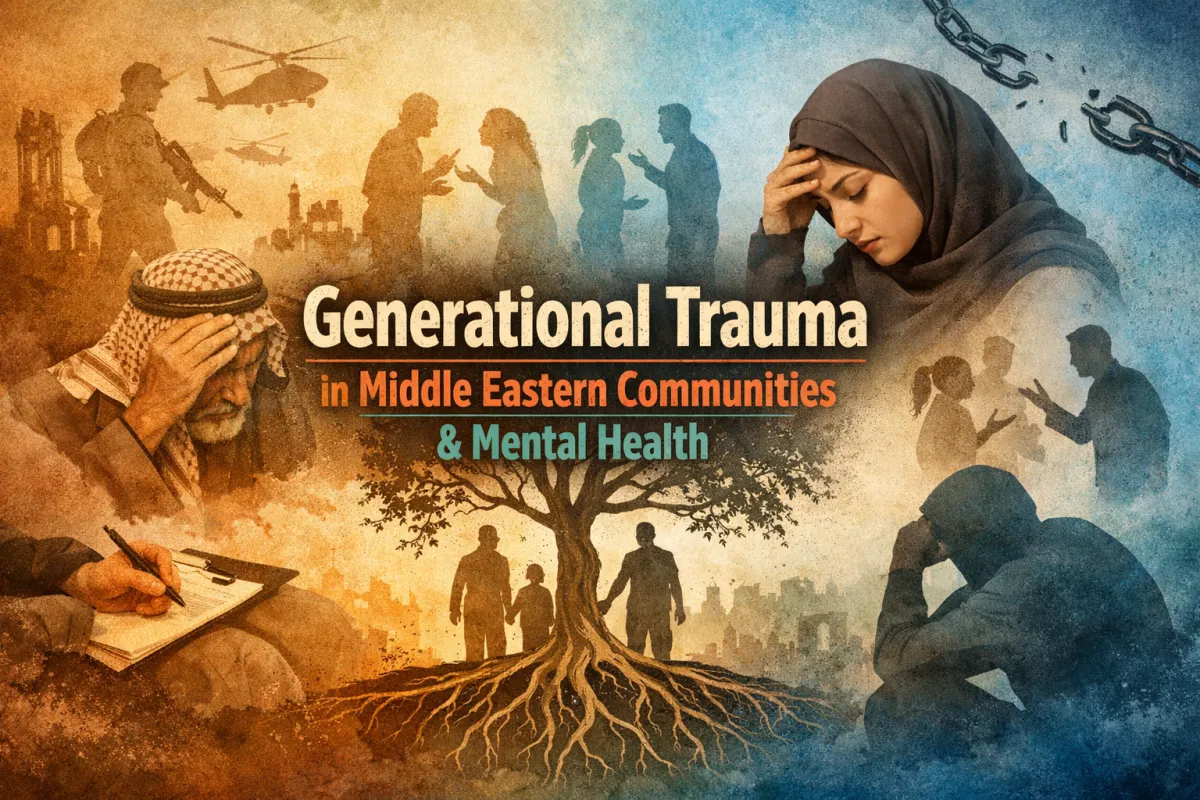
Generational Trauma in Middle Eastern Communities and Its Impact on Mental Health
Generational Trauma in Middle Eastern Communities and Its Impact
on Mental Health
Generational trauma, also known as intergenerational trauma, is a deeply rooted experience for
many Middle Eastern individuals and families. It refers to emotional and psychological wounds
passed down through generations, often without being openly discussed or acknowledged. For
many people who identify as Middle Eastern, whether living in their home countries or in the
diaspora, this trauma continues to shape mental health, identity, relationships, and emotional
wellbeing. Understanding generational trauma within Middle Eastern communities is an
important step toward healing, self-compassion, and breaking cycles that no longer serve us.
What Is Generational Trauma?
Generational trauma occurs when the effects of traumatic experiences, such as war,
displacement, colonization, political violence, or systemic oppression, are transmitted from one
generation to the next. These experiences influence parenting styles, family dynamics, belief
systems, and emotional expression.
In Middle Eastern families, trauma is often inherited through silence, survival-based values, and
unspoken expectations rather than direct storytelling. Children may grow up carrying anxiety,
grief, or fear without knowing where it comes from.
Generational Trauma and the Middle Eastern Identity
Being Middle Eastern often means growing up in a culture that values resilience, sacrifice, and
family loyalty. While these values can be powerful strengths, they can also make it difficult to
acknowledge emotional pain.
Many Middle Eastern individuals internalize messages such as:
● “Be strong”
● “Don’t complain”
● “Others have suffered more”
● “Family comes before self”
Over time, these messages can suppress emotional needs and contribute to mental health
challenges such as anxiety, depression, and chronic stress.
How Generational Trauma Affects Mental Health
Generational trauma in Middle Eastern communities can manifest in many ways, even when
individuals have not directly experienced trauma themselves. Common mental health impacts
include:
● Chronic anxiety or hypervigilance
● Depression and unresolved grief
● Difficulty identifying or expressing emotions
● Guilt when prioritizing personal needs
● Perfectionism and high self-criticism
● People-pleasing and fear of disappointing family
● Difficulty setting boundaries
These responses are often survival adaptations rather than personal shortcomings.
Mental Health Stigma in Middle Eastern Communities
Mental health stigma remains a significant barrier in many Middle Eastern families. Emotional
distress may be minimized, spiritualized, or dismissed, making it difficult for individuals to seek
therapy or support.
Phrases like “pray more,” “be grateful,” or “stay strong” may be well-intentioned but can
unintentionally silence emotional pain. When trauma goes unaddressed, it often shows up
through physical symptoms, emotional dysregulation, or strained relationships.
Family, Collectivism, and Emotional Responsibility
Middle Eastern cultures are largely collectivist, meaning family and community are central to
identity. While this can foster deep connection and belonging, it can also create a sense of
emotional responsibility for others.
Many Middle Eastern adults struggle with balancing personal mental health needs while
maintaining cultural loyalty. Therapy can help individuals hold space for both gratitude and grief,
love and resentment, connection and autonomy.
Healing Generational Trauma as a Middle Eastern Individual
Healing generational trauma does not require rejecting culture or blaming previous generations.
Instead, it involves understanding the context in which survival was necessary while choosing
new ways to relate to emotions, boundaries, and self-worth.
Therapeutic healing may include:
● Exploring family history with compassion
● Learning nervous system regulation
● Naming and validating inherited trauma
● Challenging internalized beliefs rooted in survival
● Developing healthy boundaries within family systems
For many Middle Eastern clients, healing is also an act of reclaiming identity and redefining
strength beyond endurance.
Breaking Generational Cycles
Breaking generational trauma cycles is deeply courageous work. It means feeling emotions that
others were not able to feel, speaking truths that were once silenced, and prioritizing mental
health without guilt.
Healing is not about erasing the past, it is about changing how the past lives in the present and
how it is carried forward.
Generational trauma in Middle Eastern communities is complex, layered, and deeply human. If
you identify as Middle Eastern and struggle with anxiety, depression, or emotional overwhelm,
you are not weak or “too sensitive.” You may be responding to inherited experiences that were
never given space to heal.
Therapy can offer a supportive, culturally responsive space to explore these experiences and
move toward greater emotional freedom.
